The New Shape of Fashion
Why timeless design and gender fluidity are reshaping what luxury means tomorrow
There is a quiet shift taking place in fashion, not loud enough to be mistaken for a trend and not fast enough to resemble a wave, but steady, deliberate, and deeply felt. For decades, style was defined by acceleration: faster seasons, faster consumption, faster obsolescence. Now, what feels modern is not the rush, but the return, a return to pace, presence, and permanence.
In a world saturated with garments, luxury is no longer measured in novelty. It is measured in longevity. The future of fashion is not futuristic at all. It is classic. It is thoughtful. And increasingly, it is fluid.
Slow fashion is not merely a slowing down of production; it is a reorientation of value. It removes clothing from the cycle of disposal and restores it to the space of meaning. When a garment is made to stay, not as a placeholder until the next release, but as an object of continuity, it carries emotional as well as material weight. It becomes something you live with and grow through, not something you discard when the calendar turns.
The Return to Permanence
Classic design is resurging not because of nostalgia, but because of endurance. A well-cut coat, a quiet silhouette, a fabric that holds its structure, these pieces do not beg for attention. They simply belong. They are not statements; they are companions.
This renewed appetite for permanence is not simply aesthetic. It is psychological. In the churn of seasonality, something that remains starts to feel grounding. The wearer begins to recognise not just “what looks good right now,” but “what continues to feel right over time.”
Slow fashion has made permanence aspirational again.

Clothing as Relationship, Not Transaction
Consumer sentiment is shifting from owning more to choosing well. From rapid acquisition to deliberate belonging. A thoughtfully constructed garment does not end its journey at purchase; it begins it. The more it ages, the more it becomes yours.
This is why craft is once again central to the fashion conversation. Not as ornamentation, but as evidence of care: hands, time, precision, patience. A garment that reveals its making reveals its worth. It is not just worn, it is inhabited.
Fluidity as Design, Not Declaration
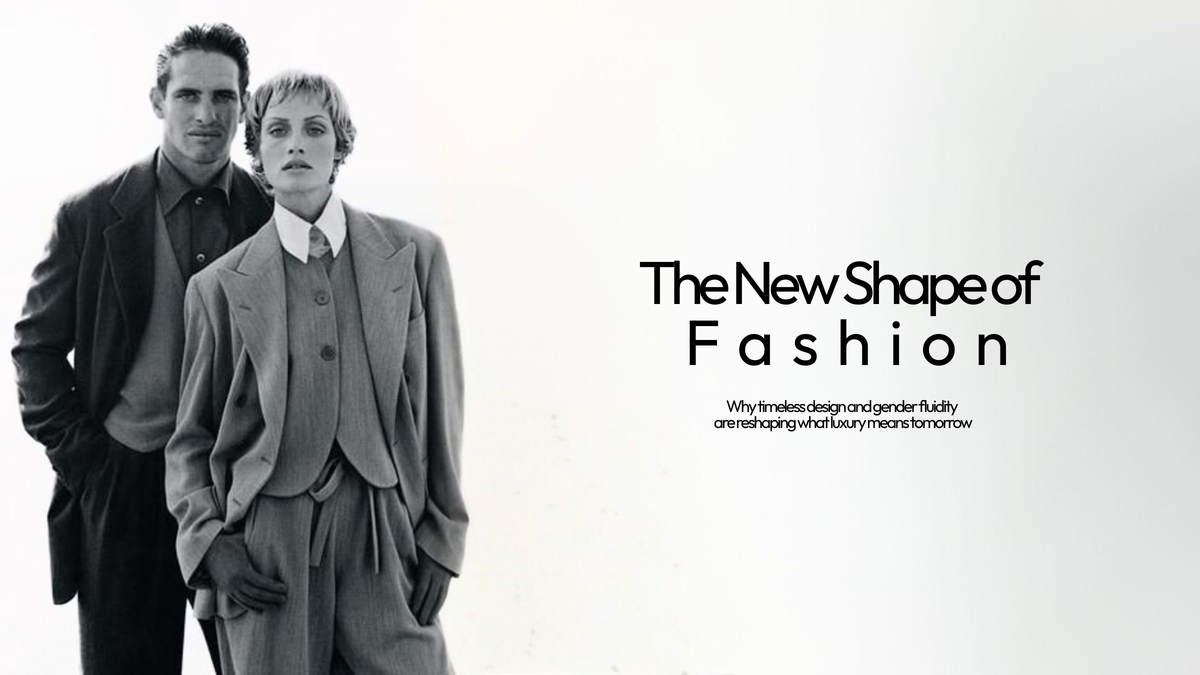
One of the most subtle yet defining shifts in contemporary fashion is the soft erasure of gendered borders in silhouette. Fluidity is no longer a novelty; it is clarity. When classic tailoring becomes unbound from category, its essence sharpens, a garment becomes less about who it was made for and more about who it allows someone to be.
This is not a movement of aesthetics, but of liberation. The idea that clothing must declare gender is dissolving, replaced by the understanding that great design belongs to the body before it belongs to a label.
Minimalism and fluidity are not separate ideologies. They are parallel truths:
What is timeless does not need a boundary,
And what is boundaryless does not need a trend.


The Global Language of Slow and Fluid
This return to quiet permanence is reflected across international houses that have built their identity not on spectacle, but on restraint.
The pared-back architectural calm of The Row, the sculptural quiet of Lemaire, the ease of Studio Nicholson, and the refined structure of Toteme, these brands are proving that modernity is not speed, but stillness.
They belong to a school of design where silhouette is the storyteller and longevity is the luxury.
A Parallel Movement in India
India, too, is undergoing its own shift, not by mimicking global minimalism, but by rediscovering restraint within its own craft vocabulary. Labels such as Bodice, Abraham & Thakore, and Suket Dhir are dissolving the boundaries between masculine and feminine through tailoring, textile, and technique , not rhetoric.
Here, fluidity is not a rebellion. It is a return to origin.
Craft has always been universal. Only retail categories divided it.
Where the New Chapter Emerges
This is the landscape in which newer Indian labels are finding their voice , not through speed or performative innovation, but through continuity, silhouette, and quiet identity.
In this space, clothing is not revised by gender. It is refined by intention.
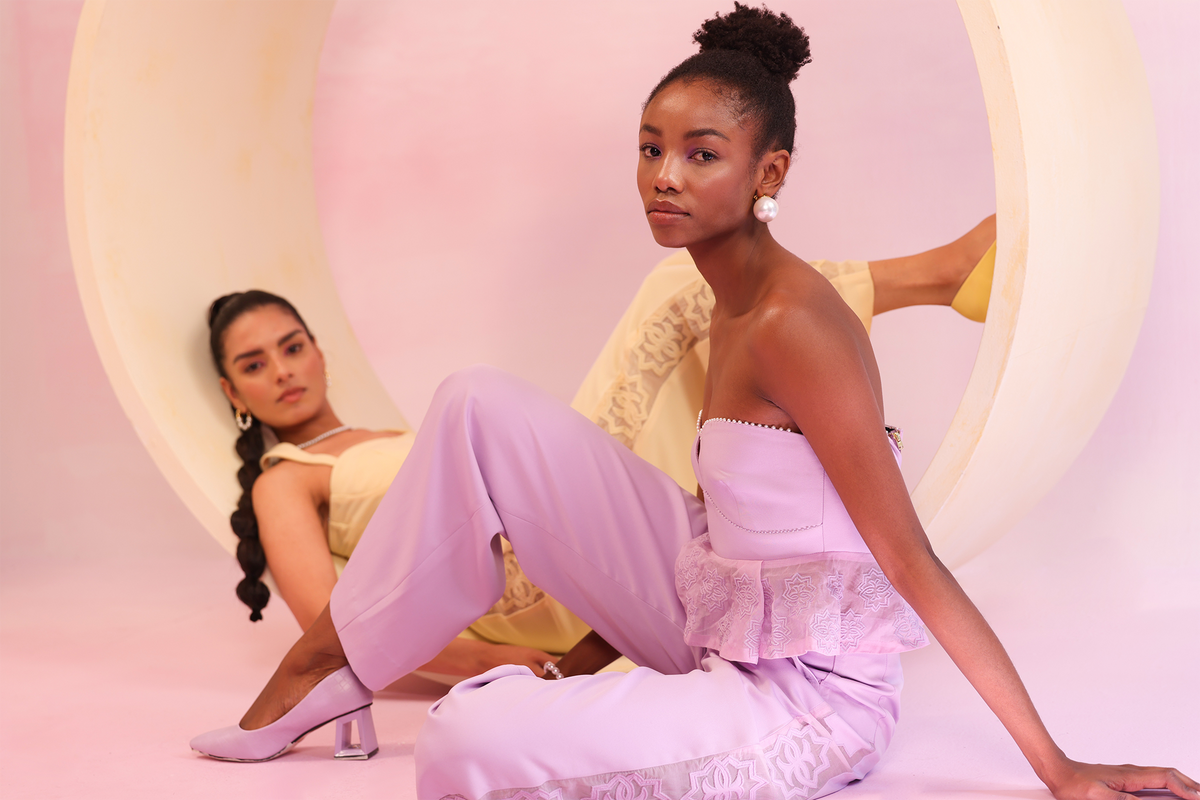
And it is here that the newest collection by Orthodox quietly takes its place: built on the belief that form can belong to anyone, and that a garment does not need classification to hold presence. It carries the very values shaping the future of fashion: silhouette over spectacle, intention over season, identity without boundary.
Not as an announcement.
Not as a trend.
Simply as permanence.